
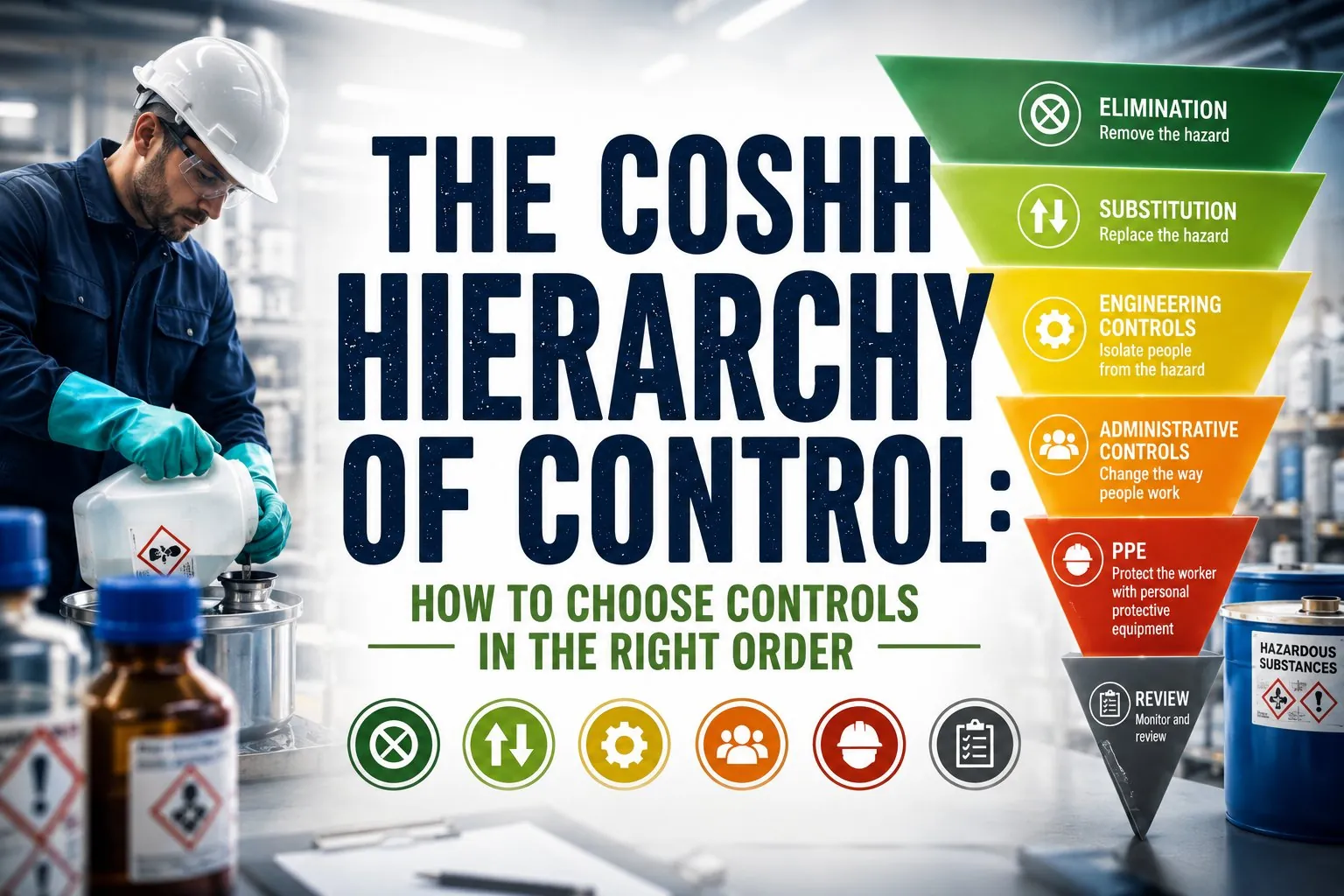
The COSHH-specific hierarchy of control under Regulation 7, from elimination through to PPE, with worked examples of each level and the regulations that drive the order.
Personal protective equipment is the last line of control. COSHH requires prevention of exposure where reasonably practicable, followed by suitable controls in the required order. Providing gloves or a mask does not remove the need to consider safer substances, processes and engineering measures.
This page covers the COSHH hierarchy of control: what it is, where it comes from in the regulations, and what each level looks like in practice. For the broader picture, see what COSHH is, and for how the hierarchy fits into the assessment, see how to carry out a COSHH risk assessment.
Where the hierarchy comes from
Regulation 7 of the COSHH Regulations 2002 is the operational heart of the regulatory regime. It splits the duty to control exposure into two distinct stages.
Regulation 7(2) sets the prevention preference. Where reasonably practicable, exposure to a hazardous substance must be prevented — either by replacing the substance with one that’s less hazardous, or by changing the process so the substance isn’t needed at all. Prevention is the first thing the regulation requires you to consider, before any thought is given to controlling exposure.
Regulation 7(3) then sets out what to do where prevention isn’t reasonably practicable. It establishes a hierarchy of control measures applied in order: engineering controls and appropriate work systems first; control of exposure at source and organisational measures next; and personal protective equipment only as a last resort, in combination with other controls.
This guide expands the COSHH approach into practical headings. Regulation 7 gives prevention and substitution priority, then specifies an order for measures used to achieve adequate control. PPE supplements other measures where those do not adequately control exposure; it is not the automatic starting point.
For carcinogens, mutagens and substances that cause occupational asthma, the standard is higher still. Exposure must be reduced as low as is reasonably practicable (ALARP), regardless of whether a workplace exposure limit exists or has been met. The hierarchy still applies, but the bar is raised throughout.
Level 1: Eliminate the substance
Elimination means removing the hazardous substance from the workplace entirely. It’s the most reliable form of control because the hazard no longer exists — no exposure is possible if the substance isn’t there.
Test whether the task can avoid the hazardous substance or process. Water-based cleaning may replace a solvent process, while sealed transfer may reduce handling exposure. Assess the new method too: enclosure reduces exposure but is not the same as removing the hazard.
Removing a substance can remove its associated exposure, but check remaining hazards and any continuing duties, including retention of existing monitoring and health records. Elimination does not automatically erase earlier record-keeping obligations.
Level 2: Substitute with something less hazardous
Substitution is the Regulation 7(2) preference. Where the substance can’t be eliminated, the next question is whether it can be replaced with something less hazardous. "Less hazardous" can mean several things:
- A substance with a lower hazard classification (replacing a category 1 carcinogen with a category 2, or with a non-carcinogen)
- A less dusty form, such as pellets or granules instead of fine powder, where this reduces the overall risk
- A more dilute formulation (10% acid solution instead of 36%)
- A different chemistry achieving the same outcome with fewer hazards (water-based instead of solvent-based)
Reasonable practicability involves weighing the risk against the time, trouble and cost of a precaution. A price comparison alone cannot establish that substitution is unreasonable: consider exposure, severity, effectiveness and the full working context.
Substitution requires care. The replacement substance has its own hazards, which need their own assessment. A water-based paint may eliminate solvent exposure but introduce a biocide. A new pellet form of a cleaning chemical may eliminate dust but be more concentrated, raising the consequences of accidental ingestion. The right test isn’t "is the new substance less hazardous in general" but "is the overall risk lower in our specific context".
Level 3: Engineering controls
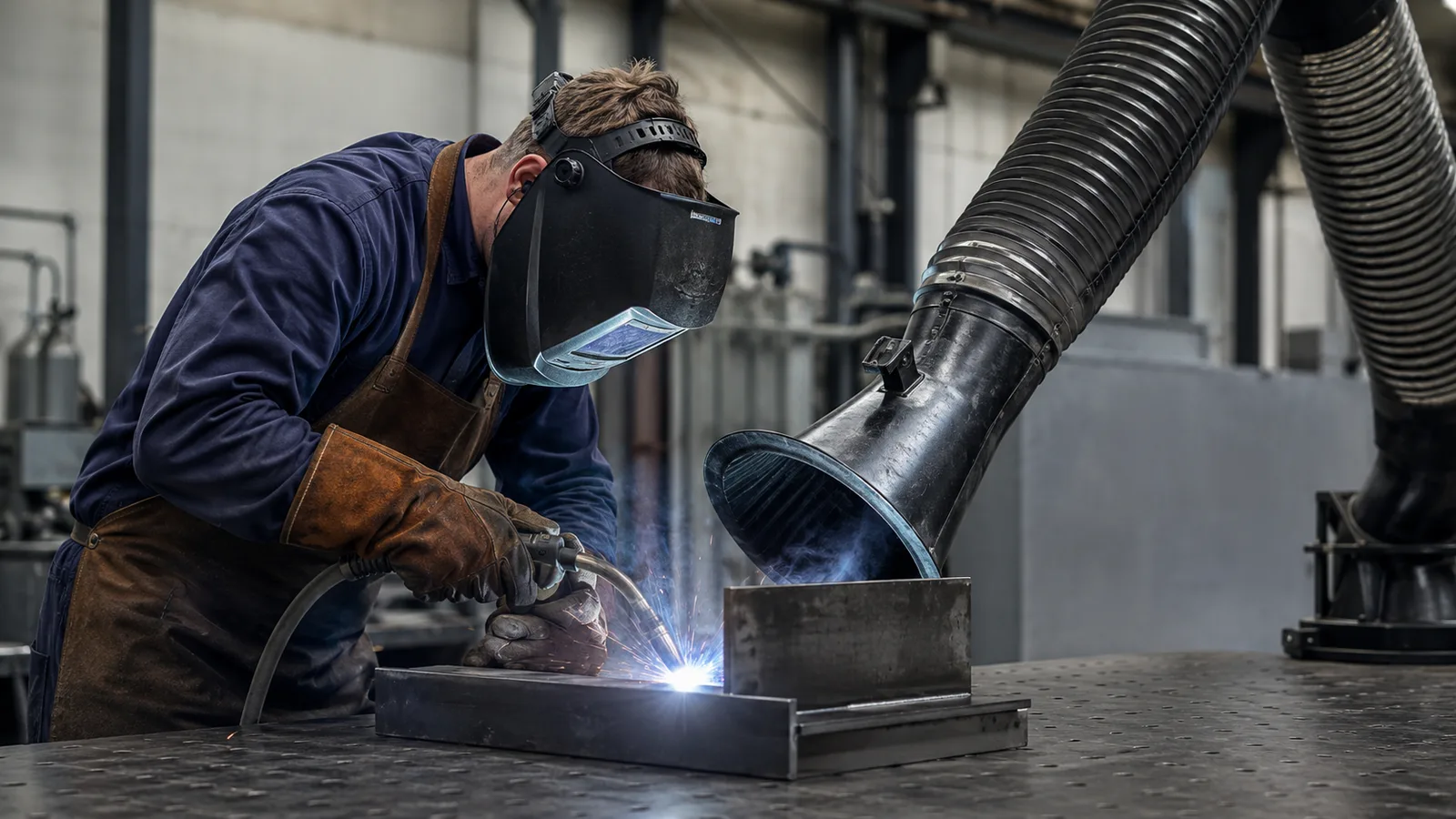
Engineering measures can reduce reliance on individual behaviour, but they still depend on suitable design, maintenance and correct use. For example, extraction may fail to protect a worker if the hood is badly positioned or the airflow is inadequate.
The main engineering controls in COSHH practice are:
Total enclosure
Enclose the process as far as practicable to limit escape of hazardous material. Examples include closed reactors and glove boxes. Assess access, cleaning, maintenance and failures, because an enclosure does not guarantee zero exposure in every situation.
Partial enclosure
The process is enclosed except where it has to be accessed. Spray booths for paint spraying, fume cupboards in laboratories, walk-in extraction enclosures for welding. Worker access is controlled by the enclosure geometry.
Local exhaust ventilation (LEV)
LEV captures contaminants near their source before they spread. Its design, discharge or recirculation arrangements must suit the hazard. HSE’s HSG258 explains design, commissioning, use and maintenance; recirculation requires particular care where harmful contaminants could return to the workplace.
Dilution ventilation
General ventilation can help control suitable low-level, widely dispersed releases. It is not an adequate substitute for source capture where concentrated or particularly harmful contaminants require more effective controls.
LEV normally requires thorough examination and testing at least every 14 months. Certain processes in COSHH Schedule 4 require shorter intervals. Routine checks and maintenance remain necessary between formal tests.
Level 4: Control at source and organisational measures
Source controls and organisational arrangements work together. Restricting access or exposure time can support engineering measures, but does not justify leaving a preventable release uncontrolled.
The main approaches:
Limit access
Restrict the people who can enter areas where the substance is used, to reduce the number exposed. Hot work permits, controlled access to chemical stores, sign-in procedures for laboratory areas.
Limit the duration of exposure
Reduce unnecessary time near exposure and organise tasks to minimise it. Do not simply rotate more people through an uncontrolled hazard; first prevent or control the release and check that remaining exposure is adequately controlled.
Reduce the quantity in use
Decant smaller working quantities from bulk storage, so the maximum quantity that could be released in any incident is limited. Move dispensing operations to dedicated areas.
Schedule high-exposure tasks for low-occupancy periods
Scheduling a task when fewer people are nearby may reduce the number exposed, but the workers doing it still need adequate protection. Ensure the area is safe before others return.
Separate clean and dirty areas
Workers don’t carry contamination into rest areas, food storage or offices. Changing rooms, hand-washing facilities and decontamination procedures keep exposure contained where it originates.
Level 5: Administrative controls
Administrative controls are procedures, signs, training and supervision. They depend on the worker knowing what to do and doing it consistently — which is why they sit below engineering controls in the hierarchy. A perfect procedure that workers ignore protects no one.
The standard administrative controls under COSHH include:
- Written safe operating procedures for each substance and process
- Workplace signage at storage areas, use points and process equipment
- Training on the substances, the controls, the procedures and emergency response — see COSHH responsibilities for employers and employees for the full duty under Regulation 12
- Supervision to check that procedures are followed in practice
- Permit-to-work systems for higher-risk tasks
- Monitoring and health-surveillance findings used to review controls; these checks do not themselves prevent exposure
Combine procedures with suitable engineering measures and check both in use. Neither paperwork nor equipment alone guarantees adequate control.
Level 6: Personal protective equipment
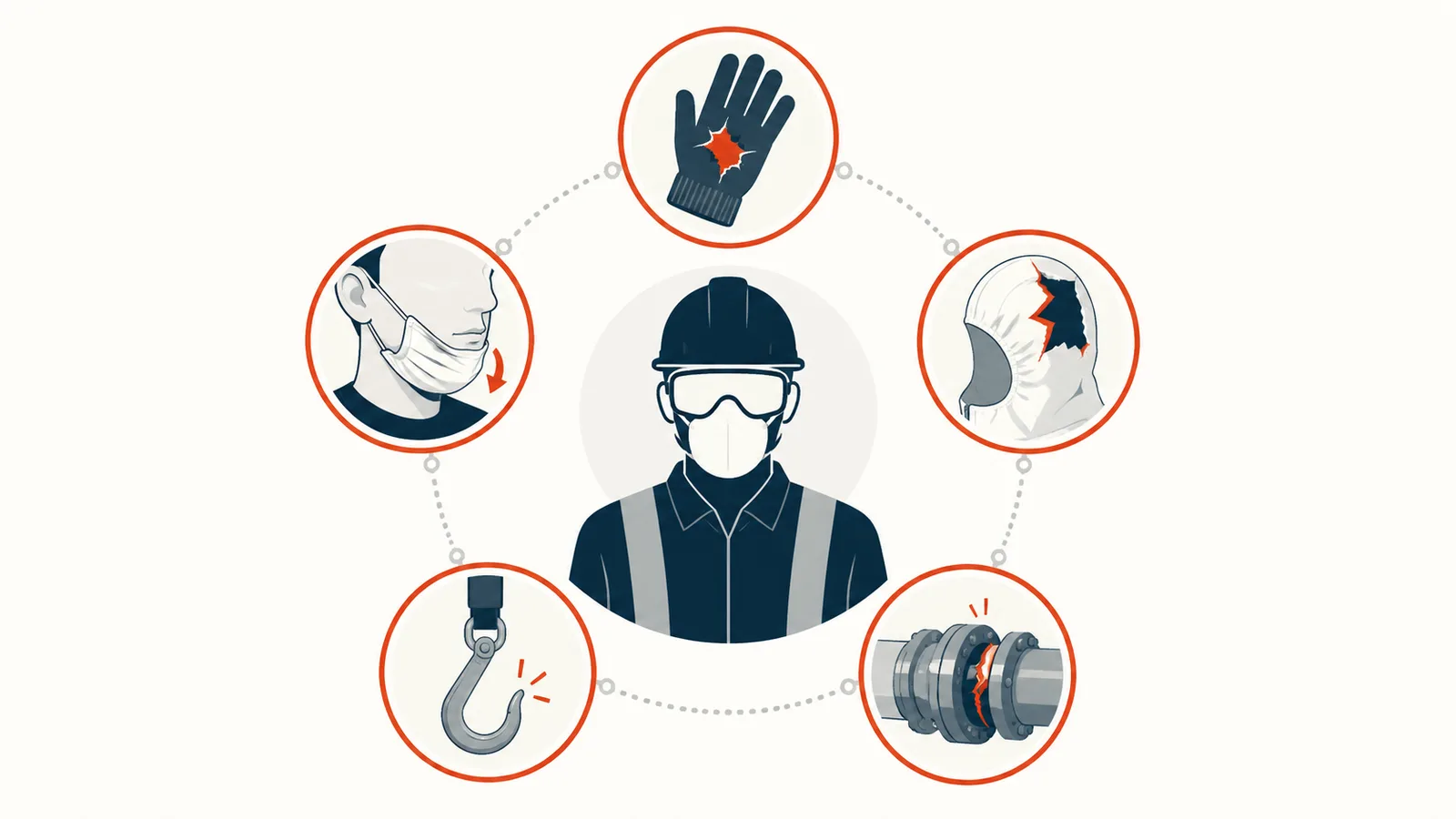
PPE depends on correct selection, fit, use, condition and maintenance. Engineering measures can be more reliable, but they also require checks and correct operation; they do not work automatically in every circumstance.
That said, PPE is often necessary in addition to other controls — even a well-designed LEV system doesn’t eliminate the residual exposure that engineering controls can’t reach. The legal position is that PPE is acceptable as a control measure provided it’s used in combination with other controls, not instead of them.
Specific PPE requirements vary by substance and use. Some general standards:
- Select chemical-resistant gloves using the chemical, concentration, contact time and manufacturer’s permeation information. Section 8 of the safety data sheet is a starting point; a generic glove material or standard number alone does not establish suitability
- Choose RPE with adequate protection for the contaminant and task. Particle filters do not protect against gases or vapours, and filtering RPE does not supply oxygen. Selection must consider concentration, required protection and the wearer
- Select eye or face protection suitable for the chemical, splash or other task hazard, using current manufacturer and applicable conformity information
- Choose chemical-protective clothing for the expected contact, splash, spray or gas hazard and its compatibility with other PPE
Tight-fitting RPE needs fit testing for the wearer and the particular make, model and size, using an appropriate method. Retest if relevant facial characteristics or the facepiece change. A clean-shaven sealing area is necessary; a fit test does not make a tight-fitting mask suitable over a beard. Carry out the user seal check whenever it is worn.
How the hierarchy feeds into the risk assessment
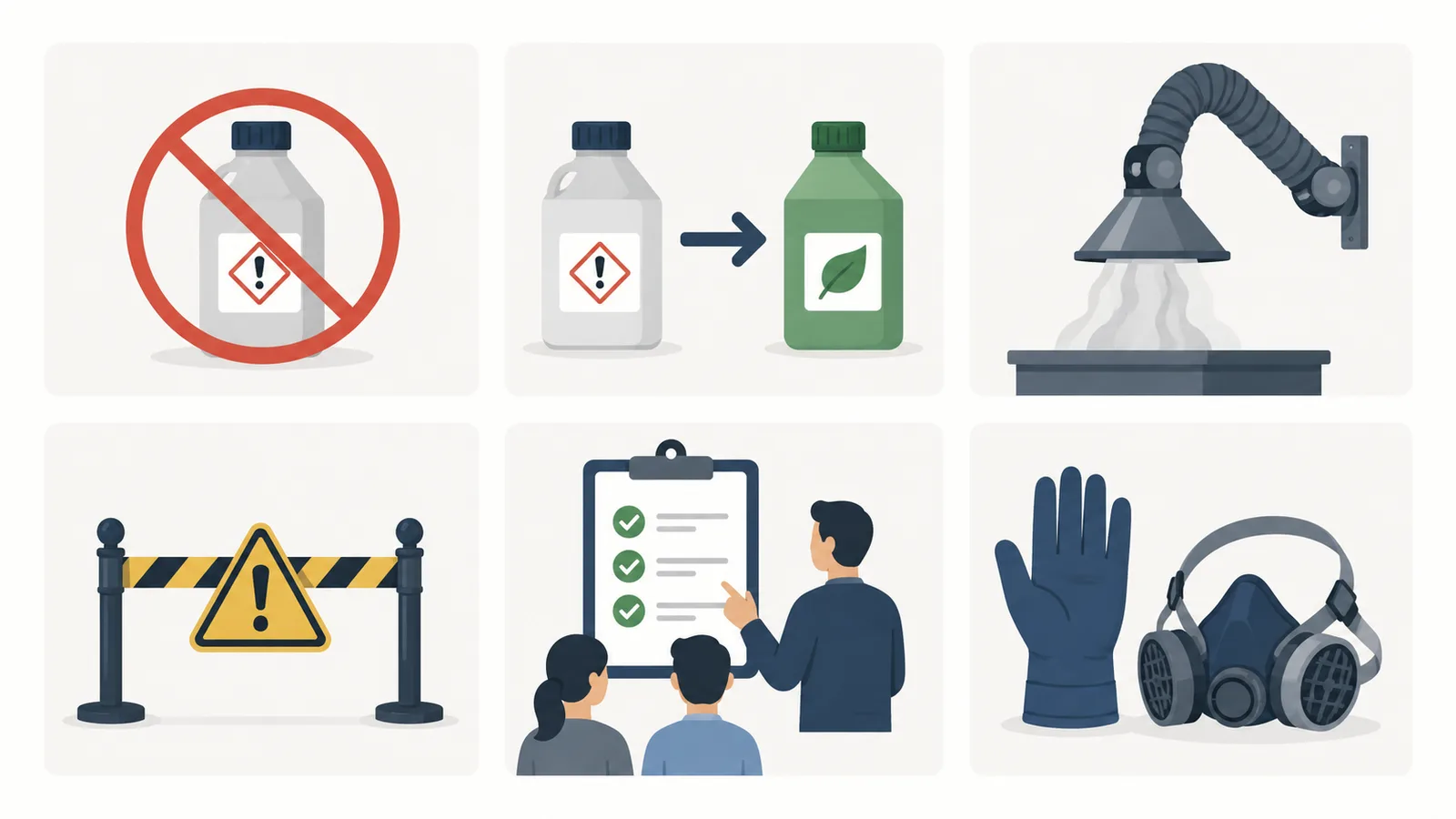
The hierarchy structures Step 4 of the COSHH risk assessment — deciding what controls to use for each substance. The assessment process works through the hierarchy in order:
- Can the substance be eliminated or substituted? (Regulation 7(2) preference)
- If not, what engineering controls reduce exposure at source?
- What organisational measures supplement the engineering controls?
- What administrative controls govern how the work is done?
- What PPE is needed in addition to the above?
The output records the controls at each level and the reasoning for choosing them — particularly any level skipped, with the justification for why it wasn’t reasonably practicable. An assessment that jumps straight to PPE without considering substitution or engineering controls won’t survive scrutiny from an HSE inspector.
Workers need to understand the hierarchy too. Knowing why PPE is the last resort changes how people use it — workers who understand that their gloves and mask supplement engineering controls treat them differently from workers who think the gloves are the only thing between them and the substance. That’s part of the Regulation 12 training duty and one of the topics covered in structured COSHH Training.
Frequently asked questions
What’s the difference between elimination and substitution?
Elimination removes the hazardous substance from the workplace entirely — no exposure is possible because the substance isn’t there. Substitution replaces it with a less hazardous alternative. The alternative still has hazards, but at a lower level. Both come before engineering controls in the hierarchy, with elimination preferred where it’s possible.
Why is PPE the last resort?
PPE relies on suitable selection, fit and consistent correct use. Prefer prevention and effective engineering or organisational controls where reasonably practicable, then use PPE for exposure that those measures do not adequately control.
What’s the difference between the COSHH hierarchy and the general hierarchy of control?
The general hierarchy ("elimination, substitution, engineering, administrative, PPE") is a single five-level pyramid used across all health and safety. The COSHH hierarchy is structured by Regulation 7 — substitution is the explicit prevention preference under Reg 7(2), and the remaining controls fall under Reg 7(3) as an ordered hierarchy. The underlying logic is the same; the legal framework is COSHH-specific.
Do I have to apply every level of the hierarchy?
Apply the statutory order of priority and choose measures that adequately control the assessed risk. Record significant findings where required. You need not install every possible measure, but choosing PPE alone without considering more effective practicable controls is not an adequate assessment.
Related guides
- COSHH Cleaning Colour Codes Explained
- The 8 Steps to COSHH Compliance
- COSHH Safety Data Sheets (SDS): What They Are and How to Use Them
Make sure your team is trained to recognise hazardous substances and apply the right controls in the right order.
View course →Sources & references
- COSHH Regulations 2002, as amended
- HSE: COSHH Approved Code of Practice L5, sixth edition
- HSENI: COSHH in Northern Ireland
- HSE: control measures
- HSE: controlling airborne contaminants at work
- HSE: fit-testing basics
- HSE: personal protective equipment

Mark writes about workplace health & safety, COSHH and accredited online training for COSHH Training, part of Online CPD Academy.